


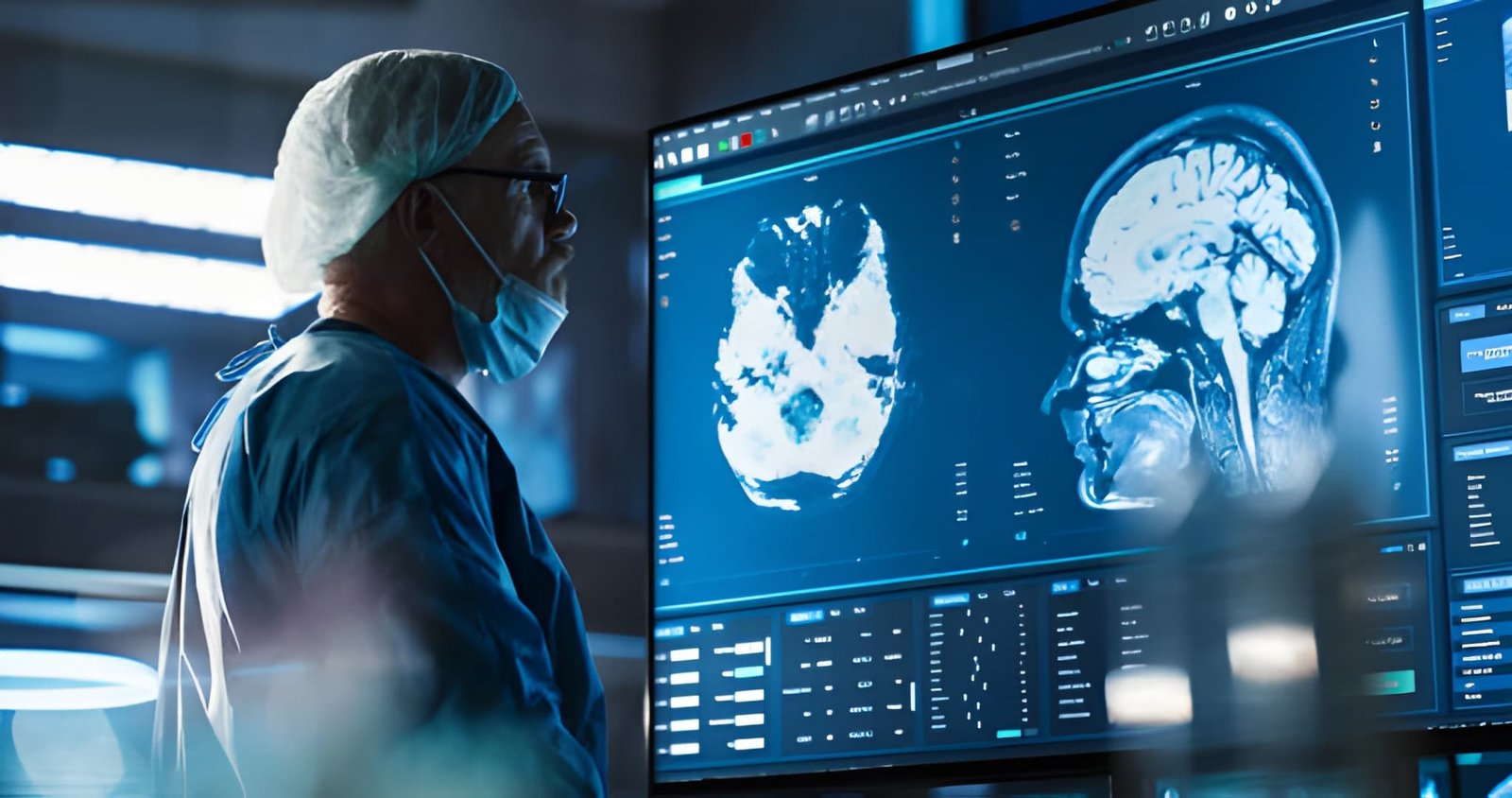
When a doctor orders imaging, the choice between an MRI and a CT scan can feel confusing and frightening. You might worry about what the machine will show, how it will feel, or what it means for your future. This guide explains the difference in clear terms, so you know what to expect. You will learn how each test works, what it shows best, and why a doctor may pick one over the other for an injury, stroke, or Alzheimer’s brain scan. You will also see what happens step by step during each test. That way, you can prepare your body and your mind. Clear facts reduce fear. When you understand why a test is ordered, you can ask sharp questions, spot problems early, and take part in your care with more strength and control.
What Is a CT Scan?
A CT scan uses X-rays and a computer to create pictures of the inside of your body. It takes many thin pictures from different angles. Then it stacks them to show clear slices of bone, organs, and blood.
You lie on a table that moves through a short ring. The scan is quick. You hear soft whirring sounds. You must stay still. Sometimes you receive contrast dye by mouth or through a vein. That dye helps certain parts show up with more detail.
What Is an MRI?
An MRI uses a strong magnet and radio waves. It does not use X-rays. The magnet lines up atoms in your body. Radio waves disturb that line. When the atoms move back, the machine records signals and turns them into pictures.
You lie on a table that moves into a long tube. The machine makes loud knocks and thumps. You receive earplugs or headphones. You must stay still for longer than a CT scan. Sometimes you receive contrast through a vein to show blood flow or scars.
Side by Side: Key Differences
| Question | CT Scan | MRI
|
|---|---|---|
| What energy does it use | X-rays | Magnet and radio waves |
| Typical scan time | Few minutes | 15 to 60 minutes |
| Best for | Bone injury, chest and belly problems, bleeding in the brain | Brain, spine, joints, soft tissues, many nerve problems |
| Radiation exposure | Yes | No |
| Noise level | Soft hum | Loud knocks and taps |
| Comfort | More open ring | Narrow tube |
| Metal implants | Often allowed | Many implants not allowed |
When Do Doctors Use a CT Scan?
You are more likely to receive a CT scan when time matters. For example, in the emergency room, a CT scan can quickly show:
- Bleeding or swelling in the brain after a head hit
- Broken bones
- Blood clots in the lungs
- Appendix or kidney stone problems
CT scans help doctors plan fast treatment. They also help check chest pain, belly pain, or trouble breathing. You can read more about CT scans from the National Cancer Institute at this CT scan fact sheet.
When Do Doctors Use an MRI?
You are more likely to receive an MRI when the doctor needs clear views of soft tissue. That includes:
- Brain and spinal cord
- Discs and nerves in your back or neck
- Ligaments and cartilage in joints
- Many tumors
An MRI can show small changes that a CT scan might miss. It can help with ongoing problems such as seizures, repeated headaches, slow memory loss, or joint pain that does not improve.
Radiation and Safety
CT scans use radiation. Doctors weigh that risk against the need for quick answers. They order CT scans only when the benefit is strong. You can see more on medical imaging risks and benefits at the U.S. Food and Drug Administration page on medical X-ray imaging.
MRI does not use radiation. Yet the strong magnet can move metal. You must tell staff if you have a pacemaker, metal clips, bullets, or other implants. Staff will check if your implant is safe for MRI.
What to Expect During a CT Scan
You can expect three simple steps.
- You change clothes or move metal objects. Staff may place an IV line if you need contrast.
- You lie on the table. The table moves through the ring. You feel the table move but not the scan.
- Staff watch from another room and talk to you through a speaker. You hear soft sounds. The scan ends fast.
What to Expect During an MRI
An MRI takes longer, yet each step is clear.
- You answer safety questions about metal. You remove jewelry, cards, or phones. Staff may place an IV line.
- You lie on the table. Staff may use pads or a light strap to help you stay still. The table moves into the tube.
- You hear loud tapping. You must stay still. Staff can see you and speak with you. You can ask to stop if you feel panic.
How to Prepare Emotionally and Physically
You can prepare in three simple ways.
- Ask what test you will have, how long it will take, and if you need contrast or fasting.
- Practice slow breathing. Picture one safe place or person. Use that picture in the scanner.
- Tell staff if you fear tight spaces or have pain. You may receive support or medicine to relax.
Choosing With Your Care Team
You do not pick the test alone. Your doctor weighs your symptoms, age, history, and safety. Then your doctor recommends an MRI, a CT, or sometimes both. You can ask three clear questions.
- Why this test and not the other
- What could happen if we wait
- How will the result change my treatment
Clear answers help you feel less helpless and more in control.
Read more: 7 Things No One Will Tell You About The Probate Process – fungroupsnames.com
Beyond the Battlefield: The Benefits of Divorce Mediation – fungroupsnames.com
Understanding Child Custody Laws in Lehi and What Judges Consider – fungroupsnames.com
