


People often think stage lighting is about power. Brighter lights. Sharper beams. Bigger rigs. But anyone who’s spent time around a live show knows that’s only part of the story. In reality, lighting is about restraint just as much as intensity. Knowing when not to light something can be as important as knowing when to flood a stage with color.
You notice lighting most when it goes wrong. When a performer steps forward and disappears into shadow. When everything feels flat and lifeless. Or when lights move so aggressively that they pull attention away from the actual performance. When lighting works, though, it feels natural. Almost obvious. Like it was always meant to be that way.
Why Lighting Shapes the Mood Before Anything Else
Before a single word is spoken or a note is played, lighting has already started telling the audience what kind of experience they’re about to have. Warm tones make a space feel welcoming. Cooler colors can create distance or tension. Sudden darkness can be louder than sound.
Lighting quietly directs emotion. It tells the audience where to look without pointing. It suggests importance without explanation. In theater, this can mean guiding attention during a dialogue-heavy scene. What’s interesting is that most people can’t explain why a moment felt powerful. They just know it did. Lighting is usually part of that reason.
The Visual Weight of a Moving Beam
There’s a reason audiences react instantly when a sharp beam cuts through the air. A beam moving head light doesn’t just illuminate — it creates presence. Especially in a hazy room, the light feels almost solid, like something you could reach out and touch.
These lights are designed for precision. Narrow angles. Focused output. Clean edges. Instead of filling a space, they slice through it.
What matters most isn’t how many beam lights you use, but how you use them. Too much movement, and the effect loses impact. Too little, and the moment falls flat. The best lighting designers treat beam effects like punctuation — short, deliberate, and meaningful.
Movement That Feels Intentional, Not Mechanical
Modern stage lighting relies heavily on programming. Lights move because someone decided they should move at that exact moment. That decision is usually made long before the audience arrives.
Moving head fixtures are controlled through lighting consoles, allowing designers to map out every pan, tilt, color change, and intensity shift. When it’s done well, the motion feels smooth and purposeful. When it’s not, it feels robotic.
That difference often comes down to equipment quality. Smooth motors, consistent optics, and predictable behavior make it easier to design lighting that feels expressive rather than technical. When a light responds exactly the way it’s supposed to, it disappears into the experience instead of drawing attention to itself.
Where Manufacturing Quietly Makes the Difference
Behind every dependable lighting setup is a stage light manufacturer that understands how these fixtures are actually used. Not in theory, but in real venues, on real tours, under real pressure.
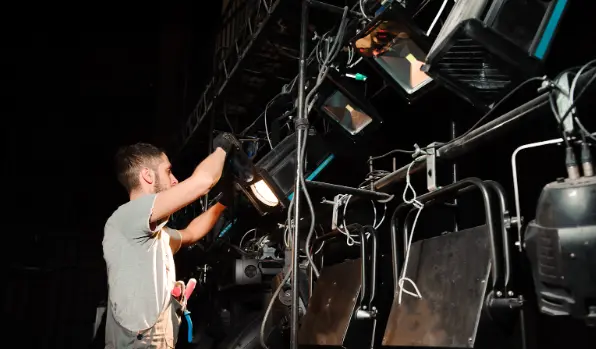
Stage lights get moved constantly. They’re packed, unpacked, mounted, dismounted, heated, cooled, and pushed for hours at a time. A good manufacturer designs with that reality in mind. Housing matters. Cooling matters. Internal alignment matters more than most people realize.
It’s also about consistency. When multiple fixtures behave the same way, designers can trust their programming. When they don’t, shows become harder to run and maintain. That’s why experienced professionals tend to stick with manufacturers that prove themselves over time, not just on spec sheets.
Reliability Beats Innovation on Show Night
There’s a lot of talk about new features in lighting. New effects. New controls. New technology. All of that is useful, but none of it matters if a light fails mid-show.
Reliability is what keeps productions running smoothly. Lights that hold focus. Motors that don’t drift. Electronics that don’t overheat. These things aren’t flashy, but they’re essential.
Support matters too. When something does go wrong, fast access to parts and clear technical guidance can save an entire event. That kind of backup is invisible to the audience, but invaluable to the crew.
A Final Thought
Stage lighting isn’t about showing off equipment. It’s about creating moments that feel right, even if the audience can’t explain why. From a single beam cutting through darkness to a subtle shift in color that changes the mood of an entire room, lighting works quietly, constantly, and intentionally.
When it’s done well, they just remember how the performance made them feel. And that’s exactly the point.
Also Read-Why Choosing Skilled Electricians Matters for Brisbane Homes and Businesses
