


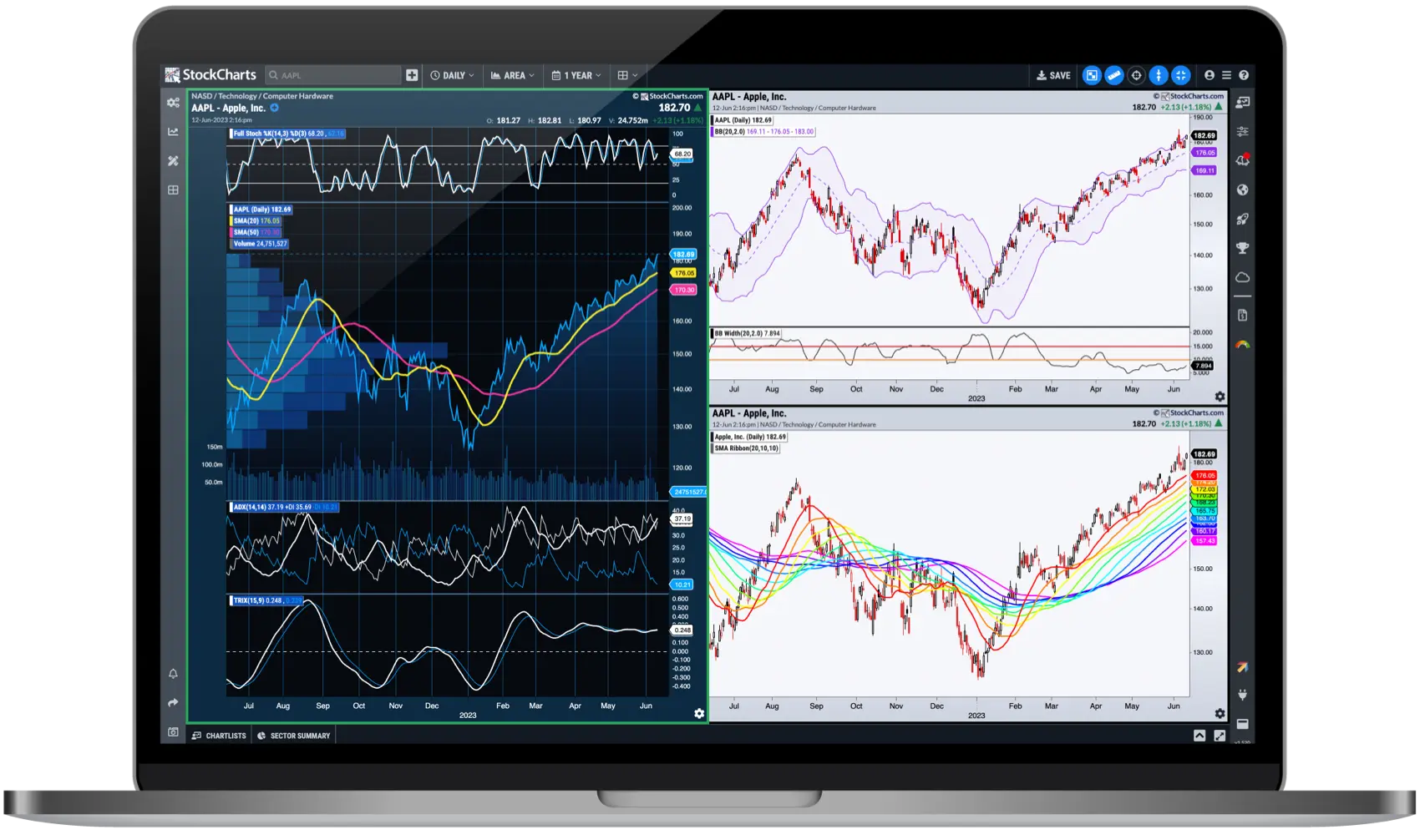
A single chart isn’t enough to tell the whole story. Market performance becomes clear when multiple stock graphs are analysed together.
You can spot which stocks are outperforming, which are lagging behind, and how market trends are evolving by analysing multiple stock graphs together. Such a comparative analysis-based approach can help you make more informed financial decisions, avoiding isolated price movements.
In this article, we are going to discuss the different methods that you can use to compare stock graphs and identify market leaders.
Why Side-by-Side Chart Comparison is Powerful
A rise in stock price does not mean you’ve won the game. It can just be that the sector’s doing well or rallying well index-wide.
A stock rising in price does not automatically signal leadership. It may be lifted by sector optimism or index-wide rallies. When several stock graphs are placed next to each other, differences in performance become more obvious.
This comparison shows which stocks are strong even in pullbacks and which ones lag when market conditions get uncertain. Leaders recover fast and take the lead from their peers.
Standardising the Comparison for Accuracy
For fair evaluation, charts must be aligned using the same time frame and performance scale. Comparing price levels alone can be misleading, so percentage-based views of stock graphs provide a clearer picture of relative growth.
Normalising data in this way allows investors to judge performance regardless of company size or share price. It ensures that leadership is measured by returns rather than nominal price differences.
- Use identical time periods across charts.
- Switch to percentage performance view.
- Focus on relative gains, not price levels.
Using Relative Strength to Identify Leaders
Relative strength analysis compares one stock’s performance against a benchmark or competitor. On comparative stock graphs, a consistently rising relative strength line shows that a company is outperforming the reference index or peer group.
This method is especially useful within the same industry, where companies face similar economic conditions. A stock that steadily outperforms its sector often signals strong fundamentals or superior market positioning.
Evaluating Trend Quality and Stability
Leadership is not just about how fast a stock rises but how sustainably it does so. Strong performers typically show orderly upward trends with higher highs and higher lows on stock graphs.
Erratic price swings, by contrast, may reflect speculative activity rather than durable demand. Stable trends often indicate institutional participation, which tends to support longer-term growth.
- Look for smooth upward price channels.
- Watch for shallow, controlled pullbacks.
- Be cautious of sharp spikes followed by deep drops.
Volume and Participation Signals
Price direction becomes more meaningful when supported by trading volume. When advances occur alongside rising volume on stock graphs, it suggests broad investor participation and conviction.
Weak volume during rallies can signal fading interest, while heavy selling volume may indicate distribution. Comparing volume patterns across multiple stocks helps confirm which trends are backed by genuine demand.
Comparing Volatility to Assess Risk-Adjusted Leadership
Two stocks can give you similar returns. The difference is in how that happens. Stock graph comparison in volatility can help you, as an investor, do a risk analysis. When stocks have a steady advance and moderate pullback, it means the decision has been good. Dramatic swings are more damaging.
Key Factors to Compare at a Glance
Reviewing these factors together provides a structured way to interpret stock graphs without relying on instinct alone.
| Factor | Leadership Signal | Why It Matters |
| Percentage performance | Consistent outperformance | Shows superior returns |
| Relative strength | Upward trend vs benchmark | Confirms competitive edge |
| Trend structure | Higher highs and lows | Indicates sustained demand |
| Volume behaviour | Rising volume on advances | Signals strong participation |
| Volatility | Controlled fluctuations | Reflects stability |
Multi-Timeframe Confirmation
A stock may appear strong in the short term but weak over longer horizons. Comparing daily, weekly, and monthly stock graphs reveals whether leadership is temporary or structurally supported.
When strength appears across multiple timeframes, it often signals durable momentum. If longer-term charts contradict short-term strength, caution may be warranted.
Conclusion
Once you start reading charts together, it becomes a reliable process. Standard timeframes, percentage performance, and analysis of relative strength volume plus volatility. These are all comparison criteria.
Evaluating stock graphs regularly is a helpful filter. Short-term noise and temporary price movements can be ignored, while consistently strong stocks stand out more clearly. This disciplined approach supports building a portfolio focused on long-term performance rather than short-term swings.
Also Read-The Best Online Tools for Nonprofits: Smart, Affordable, and Mission-Driven Tech
